
#Customer Sentiment

How to Design a Website That Converts Like Crazy Ezekiel Muoneke Content Writer Blog April 26, 2023 5:21 pm You’ve probably heard the term “conversion rate optimization” or CRO before. It’s the practice of improving your website to increase the percentage of visitors who take a desired action, such as buying a product, signing up for a newsletter, or filling out a form.  But did you know that CRO is not only about tweaking your copy, headlines, or buttons? It’s also about how you design your website to make it easy, enjoyable, and persuasive for your visitors. In this post, we’ll share six design principles that can help you boost your conversion rate by creating a website that appeals to your audience and guides them towards your goals. 1. Use Visual Hierarchy to Emphasize Your Value Proposition Visual hierarchy is the way you arrange and present the elements on your website to show their importance and relationship. It helps your visitors scan and understand your content quickly and easily. One of the most important elements to highlight with visual hierarchy is your value proposition: the main benefit or reason why someone should choose your product or service over others. Your value offer needs to be attractive, precise, and simple. It should provide a response to the question, “What’s in it for me?” Additionally, it should clearly be displayed on your homepage and landing pages, preferably above the fold (the area of the screen that can be seen without scrolling). To make your value proposition stand out, you can use contrast, size, colour, whitespace, and typography. For example, you can use a large font size, a bright colour, or a bold font weight to draw attention to your headline. You can also use whitespace to create breathing room around your value proposition and make it easier to read. 2. Use Directional Cues to Guide Your Visitors Directional cues are visual elements that point your visitors towards a specific action or location on your website. They can be explicit, such as arrows, pointers, or lines; or implicit, such as eye gaze, body posture, or shapes. Directional cues can help you direct your visitors’ attention and focus to your most important elements, such as your call-to-action (CTA) buttons, forms, or testimonials. They can also help you create a sense of flow and movement on your website and lead your visitors through a logical path towards conversion. For example, you can use an arrow to point to your CTA button and indicate where you want your visitors to click. You can also use an image of a person looking at your CTA button or form to create an implicit cue that influences your visitors’ eye movement. 3. Employ Social Proof to Increase Credibility and Trust Social proof is the phenomenon where people tend to follow the actions or opinions of others, especially when they are uncertain or unfamiliar with something. It’s based on the assumption that if others are doing or saying something, it must be good or true. Social proof can be a powerful tool to persuade your visitors to take action on your website. It can help you build trust and credibility with your audience by showing them that others have already tried and liked your product or service. There are many types of social proof that you can use on your website, such as: • Testimonials: quotes or stories from satisfied customers that highlight the benefits or results of using your product or service. • Reviews: ratings or feedback from customers that show their satisfaction level and experience with your product or service. • Case studies: detailed stories or examples of how customers have used your product or service to solve their problems or achieve their goals. • Logos: logos of reputable brands or organizations that have used or endorsed your product or service. • Awards: badges or certificates that show recognition or achievement from authoritative sources. • Numbers: statistics or data that show the popularity or effectiveness of your product or service. To make your social proof more effective, you should: ~ Choose social proof that matches your target audience and their needs. ~ Display social proof prominently on your website, especially near your CTA buttons or forms. ~ Use specific and authentic social proof that shows real names, photos, locations, or results. ~ To keep it current and useful, regularly update your social proof. 4. Use Colour Psychology to Evoke Emotions and Actions Colour psychology can simply be described as the study of colours and how they affect human feelings, behavior and emotions. Different colours can have different meanings and associations depending on the context and culture. Colour psychology can help you design a website that evokes the right emotions and actions from your visitors. It can help you create a mood and atmosphere that matches your brand personality and values. It can also influence your visitors’ actions and decisions by creating a sense of urgency, curiosity, or trust. To use colour psychology effectively, you should: ~ Understand the general meanings and associations of different colors and how they vary across cultures and contexts. ~ Know your target audience and their preferences, expectations, and emotions. ~ Choose a colour scheme that matches your brand identity and message. ~ Use contrast, harmony, and balance to create visual interest and hierarchy. ~ Test different colours and combinations to see what works best for your website and goals. Here are some examples of how different colors can affect your website design and conversion rate: • Red: Red is a powerful and stimulating colour that can evoke excitement, passion, urgency, or danger. It can be used to draw attention to important elements, such as CTA buttons, headlines, or offers. It can also increase appetite and impulse buying. However, red can also be overwhelming or aggressive if used too much or in the wrong context. It can also signify errors or warnings, so be careful not to confuse your visitors. • Blue: Blue

How to Design a Website That Converts Like Crazy Read More »

Maximizing Your PPC Advertising ROI: Tips and Tricks Ezekiel Muoneke Content Writer Blog April 21, 2023 8:45 pm PPC advertising is a powerful way to reach your target audience online and drive traffic to your website. But what exactly is PPC advertising and how can you use it effectively? PPC, or pay-per-click, is a form of online advertising in which you are charged a fee each time a user clicks on your advertisement. You can create PPC ads on various platforms, such as Google, Facebook, YouTube, and more. The most common type of PPC ad is a search ad, which appears on the search engine results page (SERP) when someone searches for keywords related to your business. PPC advertising can help you achieve various goals, such as increasing brand awareness, generating leads, boosting sales, or promoting an event. However, PPC advertising also comes with some challenges, such as competition, budgeting, bidding, and optimization. If you want to succeed with PPC advertising, you need to avoid some common mistakes and follow some best practices. In this guide, we will cover the do’s and don’ts of PPC advertising and give you some tips on how to create effective PPC campaigns that maximize your return on investment (ROI) and avoid wasting your ad spend. Do: Define Your Goals and Metrics Before you start creating your PPC campaign, you need to have a clear idea of what you want to achieve and how you will measure your success. Having SMART goals (specific, measurable, achievable, relevant, and time-bound) will help you align your PPC strategy with your overall marketing objectives and track your progress. Some examples of PPC goals are: • Increase website traffic by 20% in the next month •Generate 100 new leads in the next quarter • Boost online sales by 15% in the next year • Promote a new product launch or a special offer Once you have your goals, you need to define the key performance indicators (KPIs) that will help you evaluate your campaign performance. Some common PPC metrics are: • Clicks: The number of times people clicked on your ad • Impressions: The number of times your ad was shown • Click-through rate (CTR): The percentage of impressions that resulted in clicks • Cost-per-click (CPC): The average amount you paid for each click • Conversion rate (CVR): The percentage of clicks that resulted in conversions (such as purchases, sign-ups, downloads, etc.) • Cost-per-conversion (CPA): The average amount you paid for each conversion • Return on ad spend (ROAS): The ratio of revenue generated by your ads to the cost of your ads You can use tools like Google Analytics or Facebook Pixel to track these metrics and see how your PPC campaigns are performing. Don’t: Bid on Irrelevant Keywords Keywords are the foundation of PPC advertising. They are the words or phrases that trigger your ads to appear when someone searches for them. Choosing the right keywords is very important for reaching your target audience and driving qualified traffic to your website. However, not all keywords are created equal. Some keywords may be too broad, too competitive, or too unrelated to your business. Bidding on these keywords can result in low CTRs, high CPCs, and poor conversions. You may end up paying for clicks that don’t bring any value to your business. To avoid this mistake, you need to do proper keyword research and find keywords that are relevant, specific, and profitable for your business. You can use tools like Google Keyword Planner or SEMrush to discover keyword ideas based on your products or services, your industry, or your competitors. You also need to use different keyword match types to control how closely your keywords match the search queries that trigger your ads.  ENJOYING THE ARTICLE? Sign up For Our Newsletter Do: Optimize Your Landing Pages Your landing page is the web page that your PPC ad directs visitors to after they click on it. It is the final step before they take the desired action, such as buying your product, signing up for your newsletter, or downloading your ebook. Therefore, your landing page needs to be optimized to persuade and convert your visitors. A good landing page should: • Match the message and offer of your PPC ad • Have a clear and compelling headline and subheadline • Highlight the benefits and value proposition of your offer • Include relevant and engaging images or videos • Have a single and prominent call-to-action (CTA) button • Minimize distractions and unnecessary elements • Be fast-loading and mobile-friendly  You can use tools like Unbounce or Instapage to create and test landing pages for your PPC campaigns. Don’t: Ignore Your Quality Score Quality score is a metric that Google uses to measure the quality and relevance of your PPC ads and keywords. It ranges from 1 to 10, with 10 being the highest. Your quality score affects your ad rank, which determines where your ad appears on the SERP, as well as your CPC, which determines how much you pay for each click. A high quality score means that Google considers your ad and landing page to be relevant and useful for your target audience. A low quality score means that Google considers your ad and landing page to be irrelevant or poor quality for your target audience. You can check your quality score in your Google Ads account by adding the Quality Score column to your keywords report. You can also see the components of your quality score, such as expected CTR, ad relevance, and landing page experience. To improve your quality score, you need to: • Use relevant keywords and match types • Write compelling ad copy that matches your keywords and landing page • Optimize your landing page for conversions • Test and refine your ads and keywords  • Use ad extensions to enhance your ad Do: Use Ad Extensions Talking about Ad extensions, what are Ad extensions? Ad extensions are additional features that you can add to your PPC ads

Maximizing Your PPC Advertising ROI: Tips and Tricks Read More »

The Power of Storytelling in Digital Marketing: Connecting with Customers Emotionally Ezekiel Muoneke Content Writer Blog April 14, 2023 5:35 pm Humans have an innate desire to relate to stories. We listen to and make up stories that influence our lives from the minute we are born. Stories make us feel alive, and they help us make sense of the world around us. This is why storytelling is such a powerful tool in digital marketing and by extension digital marketing. By telling compelling stories, brands can connect with their customers on an emotional level, creating a bond that goes beyond the transactional relationship. The Role of Storytelling in Digital Marketing Storytelling has always been a powerful marketing tool. In the past, brands used storytelling in their advertisements, packaging, and other marketing materials. But with the advent of digital marketing, storytelling has become even more important. With so much noise and competition in the online space, brands need to find ways to stand out and connect with their audience. This is where storytelling comes in. By telling stories that are relevant to their brand and audience, brands can differentiate themselves from their competitors and capture the attention of their customers. Stories can also help brands build trust and credibility with their audience, which is essential in today’s hyper-connected world. To use storytelling effectively in digital marketing, brands need to understand their audience and their values. They need to create stories that are authentic, relatable, and emotionally resonant. The following are some tips on how to use storytelling in digital marketing: 1. Know Your Audience To create compelling stories, you need to know your audience inside out. What are their pain points? What are their values and beliefs? What sort of content do they enjoy reading, seeing or listening to? By understanding your audience, you can create stories that speak directly to their needs and interests. 2. Be Authentic Consumers today are informed and adept at spotting forgery. Your stories need to be real and honest if you want to engage your audience. Don’t try to be something you’re not or tell stories that don’t align with your brand values. Authenticity is the key to building trust with your audience. 3. Be Emotional Emotions are a powerful tool in storytelling. They can help you connect with your audience on a deep level and create a lasting impression. Use emotions to create empathy with your audience and to convey the message you want to send. 4. Be Creative To stand out in a crowded market, you need to be creative with your storytelling. Use different mediums, such as videos, podcasts, and blogs, to tell your stories. Use metaphors and analogies to create a deeper meaning. Be bold and take risks with your storytelling. 5. Measure Your Success As with any marketing strategy, it’s essential to measure the success of your storytelling efforts. Track interaction, shares, and conversions with analytics tools. This data will help you understand what’s working and what’s not, so you can refine your storytelling strategy. ENJOYING THE ARTICLE? Sign up For Our Newsletter The Benefits of Storytelling in Digital Marketing The benefits of storytelling in digital marketing are numerous. Here are a few of them: 1. Builds Brand Awareness By telling compelling stories, brands can build awareness of their brand and create a memorable impression on their audience. When people remember your story, they will remember your brand.  For instance, in the early 2000’s when modern mobile phones were still in their infancy years and private network providers were gradually permeating the Nigerian market, Etisalat came up with the “Zip-lip” campaign that ran for 7 consecutive days. The ad basically depicted a 5 seconds closeup shot of a lady’s zipped green lips. And while this felt a bit weird at the time, what made it more intriguing was that in subsequent advert iterations, the zip gradually moved, indicating the lady wanted to speak. It was not until the 7th iteration that the zip became undone and the tagline “Now you’re talking” unveiled Etisalat as the new network service provider in Nigeria. 2. Creates Emotional Connections Storytelling can create emotional connections with your audience, which can lead to brand loyalty and increased sales. When people feel connected to your brand, they are more likely to buy from you. The indomie “Mama you do good” campaign is a prime example. 3. Differentiates Your Brand In a crowded market, storytelling can help your brand stand out from the competition. By telling unique stories that are aligned with your brand values, you can differentiate yourself and create a niche for your brand. 4. Boosts Engagement Engagement is essential in digital marketing, and storytelling can help you achieve it. When people are emotionally engaged with your brand, they are more likely to interact with your content, share it with others, and become brand advocates. 5. Increases Conversions When people are emotionally connected to your brand, they are more likely to convert into customers. Storytelling can help you create a connection with your audience, which can increase your chances of making a sale. Examples of Storytelling in Digital Marketing There are many examples of brands that have successfully used storytelling in their digital marketing efforts. Here are a few examples: • Coca-Cola Coca-Cola is a brand that has been using storytelling in its marketing for decades. The brand has created some of the most memorable advertising campaigns in history, all of which are based on storytelling. For example, the “Share a Coke” campaign, which encouraged people to share a Coke with someone they care about, was a huge success and helped to create an emotional connection between the brand and its audience. Not only that, it went on to become synonymous with the Christmas holiday. • Airbnb Airbnb is another brand that has successfully used storytelling in its marketing. The brand’s “Belong Anywhere” campaign featured a series of videos that told the stories of people who used Airbnb to travel the world. These stories helped

The Power of Storytelling in Digital Marketing: Connecting with Customers Emotionally Read More »

work force management ZMS.

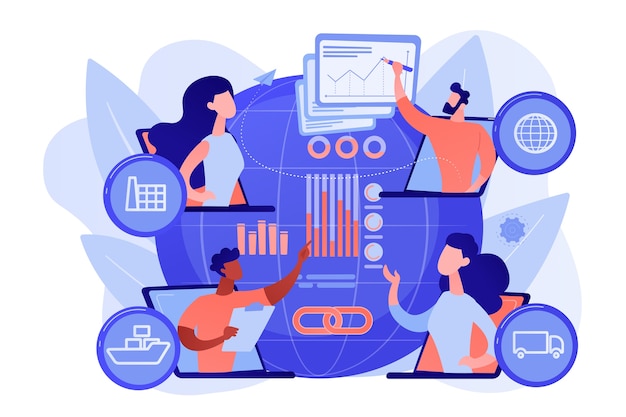
Effective workforce management is a key factor in achieving business success. It involves ensuring that the right people with the right skills are in the right place at the right time. In today’s fast-paced business environment, it is more important than ever to have real-time data at your fingertips to manage your workforce effectively.

Maximizing Workforce Management Efficiency through Real-Time Data Read More »